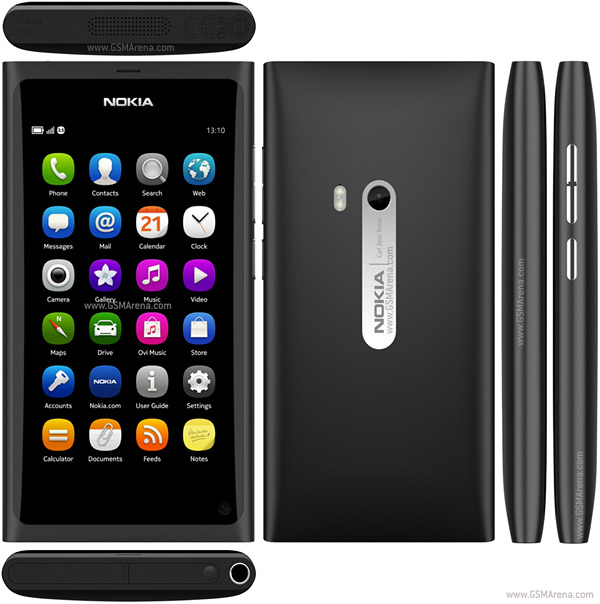
Microsoft have recently announced the formal end of their adventure into cut throat business of making and selling mobile ‘phones. It is not entirely surprising. Towards the end of 2019 Microsoft announced a number of new products, including a new, folding, Android mobile call the Surface Duo.
If not clear before, this, publicly, marked the beginning of the end of the Windows Mobile devices. Microsofts history and efforts in the mobile markets are long, twisted, expensive and very well documented, here and here. It does not include the MS Windows CE foray, mostly becuase noboy seems to be intereted enough to have written a good history or CE. Perhaps most have even forgotten about it.
But, with Windows Mobile officially and emotionally dead, the third platform, as small as it was, means that there are now, really only two options for those wanting some soft of “smart ‘phone”; Android and Apple.
The issues with each are well known. Google is the worlds largest advertising platform, whose mobile devices, in the hands of hundreds of millions of people around the world, provide a steady and constant stream of data of users habits; where they go, what they search for on line, what they buy, who their friends are, what their friends are interested in, etc, etc. The list goes on. We know what Google does with this information. It is how Google makes it’s money. It is what it does.
Apple is no better. In some cases, worse. Apple take a view that you only rent your device. THey are happy to add and remove programmes, or as they want you to call them “‘apps'” from your device. They are happy to push the model of “pay for everything, but remember you’re only renting”. Purchased software can be removed from you if Apple see fit. They have and they often do. The Cupertino Tax is a well understood fiscal entity, much like the Show Event Horizon. An example of the Tax is noted here.
So where do current Windows Mobile users go now ? The Guardian, Blighty’s own Complain-a-lot daily, suggested Android and, er Android, when asked this very question recently. And to a point, they’re sort of right. For the majority of users, buying their devices from the majority of retailers, the choice is less about the O/S and more about the brand; Nokia, Huawei, Samsung, HTC, OPPO, Fairphone….. and on. They all run Googles advertising platform.
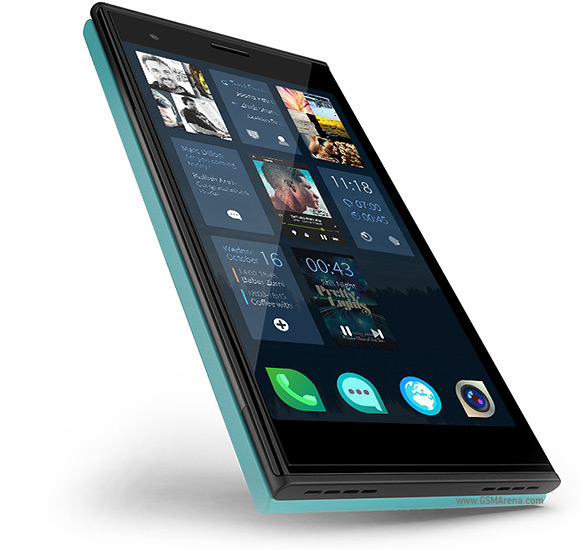
So just what are the options, if not Apple nor Google ? There are some, but not many. One of my favourites, still is Jollas Sailfish. I still have and am still using, daily, my original Jolla device, which is now running Sailfish Three. I’ve written many times about Jolla and Sailfish so won’t repeat here. There are however, some availability issues for Sailfish. In the EU, you won’t actually find any Sailfish devices, despite the fact that it is actually developed in Finland. There are devices running Sailfish available in South America, Russia and a massive market in India. But not in Europe. Sailfish, either as SAilfish X or Sailfish Three can be downloaded and run on many devices and Jolla even provide a support for the Sony Experia series. But this is a manual process. As it would be if Sailfish was added to the Gemini, another excellent device I own. There is a pattern to my device ownership.
There are some other options, just over the event horizon which will be more than a capable solution to the nations mobile needs, if not widely lauded.
Purism, makers of a range of secure laptops, using the PureOS have launched the Librem5, a mobile also running the PureOS. It’s main selling point are three “kill switches” that will turn off. or kill, various levels of wireless, physically, not just in the software level. For example, when one “switches off” wifi in Android it is not really swithed off. It still have the ability to find wifi networks and show “what is available”. There are also various IFTTT scenarios where the wifi can be connected to when you arrive at home or at work. The GPS is still connected, wifi will be activated and location tracking is the default.
The Librem5 takes the view that physical switches, on the side of the device, will physically “turn them off” so that they are not controlled by any software level. When they’re off, they’re off. Security and privacy are paramount. Wonderful.
The down side is of course that currently, the Librem5 is only available through the Purism website. PCWorld do not and, almost certainly, will never carry them. Probably because only Volvo make safety sexy and partly because explaining /why/ safety is important is hard work for a retailers. The LIbrem5 is likely to remain a niche product. Excellent, but niche.
The same logic also applies to the PinePhone. Currently available only as a developer unit, with no O/S installed, it does exist and does work, but, is not planned for mainstream release until Q2 or Q3 of 2020. There are bugs to be resolved, there is some UI smoothness to add but mostly it needs to be released to the wild to let developer users break it so that regular users can not. This is normally called product testing. This is a good thing.
The issue with both the Librem5 and the PinePhone is not the thing itself, not the build quality, the ethics, the quality or logic of software, but one of marketing, investment and crucially, market awareness. Is there anybody beyond the age of, say ten, who is not aware of either Google or Apple, or both ? No, probably not.
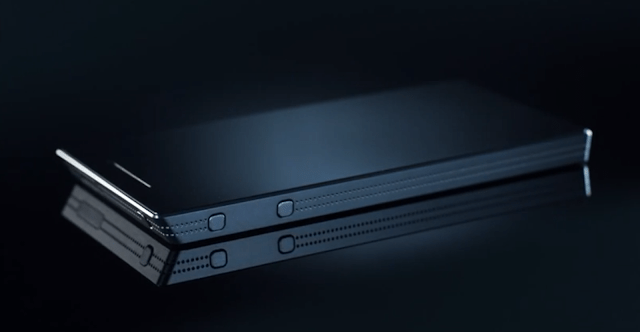
Not many people have heard of Jolla and even less that they did release at one device. Ubuntu tried to release a device, through crowdfunding, as a way to test the waters. The waters were too shallow and the project was pulled. It was a beautiful thing. Only the renders remain. Ubuntu Touch remains, but is more niche than a Rolls Royce Cor. Tizen, Samsungs homegrown Linux variant, is not available as a mobile OS outside of Korea, although it does power most of Samsungs televisions and set top boxes, did show promise, but again could not gain traction. It is available on some “smart watches” but little else.
Ironically, the future of some of these Google / Apple alternatives could be in the hands of one Donald Trump. If the US embargo on US products to Chinese vendors holds swap, the likes of Huawei, ZTE and others could see the Chinese develop a real alternative eco-system of non Android devices. Whether this will see a Chinese homegrown alternative that will make it to Europe, of they will embrace a euro-centric OS like Sailfish remains to be seen.
Which means that for 99% of buyers the choice today is as it was yesterday, limited. Will tomorrow be different ? One can only hope.
 Mark Daniels