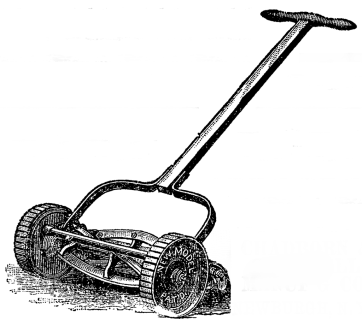
 For reasons I am not going to go into, I have just discovered that Edwin Beard Budding was the inventor not only of the Lawn Mower, but in 1842 invented the adjustable spanner. Two everyday items that largely go unnoticed. And the name of Budding is almost unknown outside of those people who will debate the difference between a bolt and a screw.
For those who are interested, a bolt will have a dowelling function, with a portion that is not threaded, to hold things in the correct position and secured with a nut. If it is threaded all the way along and screws into a thread on another component it is, technically, a screw.
All of this got me thinking about other inventors of everyday items, without whom life would be more tedious and difficult but whom are, probably, almost entirely unknown for their inventive efforts.
Trevor Baylis not only invented the wind up radio, something so obvious that it was astonishing that it is surprising that it waited until 1994, but also the electric shoes, which generated and stored small amounts of power, just from walking.
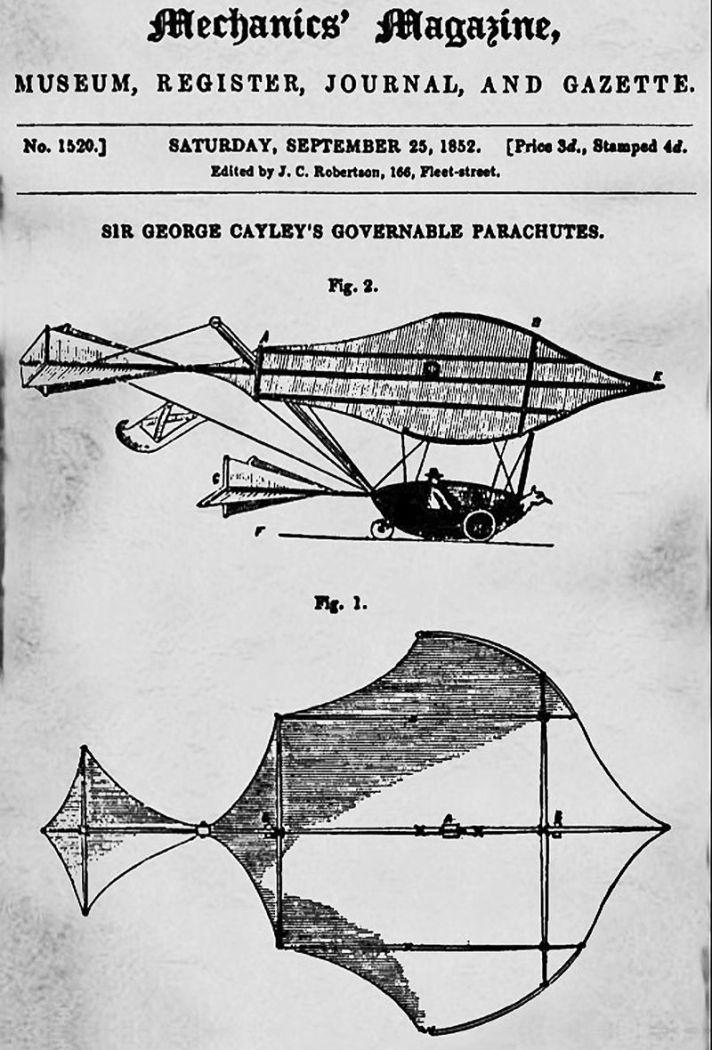
George Cayley is one of those breed of hardy Yorkshire folk responsible for the Continuous track, as used on all military tanks and many tractors and other industrial equipment, automatic signals at railway crossings, self righting life boats and the tension spoke wheel. There are two on every bicycle. Yes, even the wheel had to be invented.
Cayley also designed, built and flew, what is considered to be the first piloted glider. He wrote a landmark three-part treatise titled “On Aerial Navigation” in1809–1810. His school books, dating from 1792, indicate that Cayley identified the principle of a lift-generating inclined plane when he should have been listening to his Latin teacher conjugating the verb go.
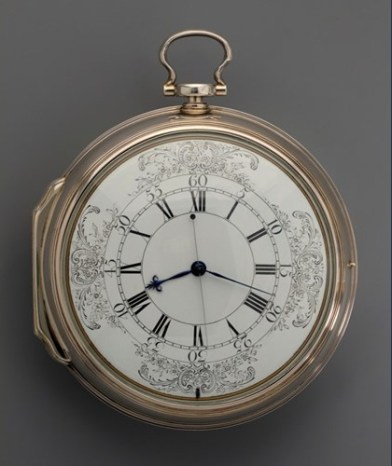 John Harrison, another stout Yorkshire man, invented the first working Marine chronometer. It is clear that there were Marine chronometers before Harrison set to work, however, none of these predecessors could solve the problem of calculating longitude while at sea. His solution revolutionized navigation and greatly increased the safety of long-distance sea travel. Such a man was Harrison that not only did he invent the Marine chronometer, for ships, but his H4, the Harrison version Four, was a pocket, or fob, Marine chronometer. Hail Yorkshire.
The Norfolk Captain George William Manby invented the Manby mortar, which as everybody will know was intended to save lives from shipwrecked vessels. The mortar fired a shot with a line attached from the shore to the wrecked ship. It was used by the Waterguard and later by H M Coastguard for many years. In 1813 Manby also invented the first portable pressurised fire extinguisher. This needs no explanation.
On March 17, 1845, Stephen Perry received a patent for the rubber band. 1856 saw William Perkins invented mauvine, now more commonly called mauve or purple. He was the first person to artificially create a synthetic purple which could be permanently fixed to materials. In essence, he invented purple material.
Jethro Tull is not only the hugely successful English, folk and prog’ rock band, known for Auqalung, Thick as a Brick and Too Old to Rock ‘n’ Roll: Too Young to Die, but was an English agricultural pioneer from Berkshire who helped bring about the British Agricultural Revolution. He perfected a horse-drawn seed drill in 1700 that economically sowed the seeds in neat rows. He later developed a horse-drawn hoe. Tull’s methods were adopted by many great landowners and helped to provide the basis for modern agriculture. Despite this excellent, he was from Berkshire, not Yorkshire.
Joseph Priestley was an 18th century English theologian, English Dissenters clergyman, natural philosopher, chemist, innovative grammarian, multi-subject educator, and liberal political theorist who published over 150 works. He has historically been credited with the discovery of oxygen, having isolated it in its gaseous state. Impressive stuff. It was perhaps the makers of a variety of whiskies, brandies, Vermouth, and Campari that may be most thankful to Preistley who, in 1767 invented carbonated water. There would be no Coca Cola, Tango nor Perrier without him. Food for thought.
One does wonder if Arthur Wynne, inventor of the crossword, had had too many whisky and sodas?
Michael Faraday, doyen of all fans of everything electromagnetic, is known for Faraday’s law of induction, Electrochemistry, the Faraday effect, the Faraday cage, the Faraday constant, the Faraday cup, Faraday’s laws of electrolysis, the Faraday paradox, the Faraday rotator, the Faraday-efficiency effect, the Faraday wave, the Faraday wheel and Lines of force. However, every child over the age of six months owes hours of fun and buckets of gratitude for every birthday party as Faraday also invented the balloon. Who knew?
Having driven around or through most countries in Europe and a number of countries in Africa there is one invention that, despite its blindingly obvious benefits, is startlingly conspicuous by it’s absence. It is often said of Percy Shaw’s Cats Eyes that he was inspired by the reflective eyes of a cat looking towards him and that if the car were walking away he may have invented the pencil sharpener. Thank you Barry Cryer for that one.
Finally of course, there is the inventor of the mill edge coin and the cat flap, a device of the utmost cunning, perspicuity and invention, Isaac Newton. Yes, there was differential calculus, Newtonian physics, the reflecting telescope and Gravity, which was merely a discovery, rather than an invention. It was there to be discovered. They even keep it on at the weekends.
But the cat flap was a stroke of masterly thinking. A door within a door. For a cat. Genius.
 Mark Daniels