The recent announcement of the “new” Nokia 3110 got me thinking about all of the different Nokias I have owned over the years. There have been a few.
I have owned other devices from other brands, such as the Siemens C35i which, if my memory serves correctly, was one of the earliest Cellnet branded devices. I also had, for a short period a Sony CMH-333, also known as the Mars Bar ‘phone. As a Project Manager for Cellnet / 02 responsible for the BlackBerry role out in the UK [the first BlackBerry role out outside of Canada] I had the chance to use some early GPRS devices.
The very first devices I used, borrowed from my girlfriends mother, was an analogue Motorola, the MicroTAC, analogue forerunner to the hugely successful StarTac. However, once analogue had dies its inevitable death and the money was coming out my bank account rather than my employers, I invested it in Finland. Nokia became my Brand of choice.
The first device I bought with my own hard earned money was the 5110, one of the earliest to have interchangeable covers. Initially this seemed like a great idea, however, as user, or to this user, it added very little. Blue, green, red; pretty much all the same.
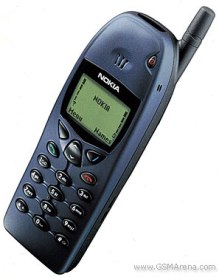
Because of the excellent discounts I would get through my job, I was able to change the 5110 to the 6110. This was then, and still is, one of my favourite devices. Even when I had another device, the 6110 was still my back up device. Build quality was excellent, to the point of perfection. I would run with, mountain bike with it. It was dropped in mud, on the floor and generally abused. It never let me down. It had a fantastic battery, logical user interface that meant I never, ever, read the manual and was all wrapped up in a purple / green dual tone colour. It also had an infrared port which meant I could connect my Psion 5MX via infrared and use the 6110’s GPRS connection as a modem. Voilà, mobile email. Brilliant.
I then had a brief flirtation with the 6800, but to be honest, the split keyboard never really worked for me. Nokias excellent predictive text meant the extra full keyboard was almost redundant.
The first colour screen device I had was the excellent, if ever so slightly chunky, 6600. Looking at the specifications for this device it has a Li-Ion 850 mAh battery. Comparing that with a mid-range current Motorola, such as the Moto G, second generation, with its 2070 mAh battery with its circa 50 hours on standby, it is a marvel of quality coding that the 6600 had a standby rating of 240 hours.
This was a feature of all of the Nokias I had. One of the reasons why I kept going back to Nokia.
The 6600 kept me going for some time, because at this time, Nokia were experimenting with some rather unusual form factors. The 7380was a long, slim device with no keyboard, but instead a rotary dial; the N90 and 3250 both features rotating sections that allowed the screen to be positioned at 90 degrees to the keyboard. Interesting, and perhaps useful for taking pictures, but this was never something that interested me. Then, or it has to be said, now.The 7370 and 7360 both had Levis style tabs showing an extra sense of style, if nothing else.
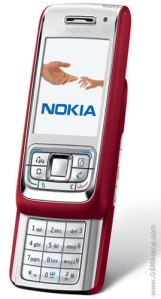
The next device I bought was, perhaps, my favourite of all Nokia devices and, to a point, all the devices I’ve ever owned. It was the Nokia E65. This was the main device I was using whilst I was working in Madagascar, Zambia, Gabon and Congo. From a user perspective, I would talk on it for three to four hours per day and still only need to charge it, perhaps twice a week, sometimes three times a week. A colleague of mine was using one of the early Apple things, with its touch screen, built in battery and always on background applications. He would often run out of power by 2200 hours. Every day.
For me this was pretty much everything I needed in a device. It was able to multi task in way that even now Android and Apple are not; to have more than one application running and doing something and to be able to switch between them and use them. There many times when I would be on a call using the speaker phone, send an sms to somebody to remind them to join a meeting and check the calendar for the conference call dial in details. For 2007 this was pretty good.
One of the main applications I would use on the device was Fring, sadly now defunct. This was an IM client that would connect to ICQ, Yahoo and one or two others, including Skype, before Microsoft stopped third parties connecting via the API. It also had an excellent sliding section that closed with a satisfying solidity to end calls, had a lovely brown and bronze colour and the usual rock solid build quality. I have a feeling that, because the battery was replaceable, I may still have it working if I wasn’t mugged in Pointe Noire.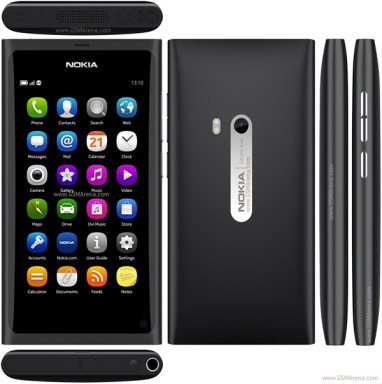
My next Nokia was quite a departure, both for me and for Nokia, the remarkable N9. Nokias first non Symbian device, an all in one touch screen with no buttons on the front and, most importantly, a non changeable battery.
The user interface was simple, intuitive, on a beautiful AMOLED screen with 450 hours on standby and a slew of excellent applications. Alas, the N9 was not the saviour of Nokia which was swallowed by Microsoft, Meego was put in a box and allowed to gather dust and to be replaced by MS Windows for Mobile.
When Nokia’s mobile / handset business was effectively closed down and masses of people released a few them decided to reinvigorate Meego and created the company Jolla and developed the new OS, Sailfish. I bought my Sailfish powered Jolla in February 2014.
It is still my main device.
 Mark Daniels